Showing posts with label soil. Show all posts

Tuesday, December 11, 2018

Hunting Cattle

After reading through most of Cows Save the Planet and other Improbable ways of Restoring Soil to Heal the Earth by Judith D. Schwartz, my main takeaway is that which the author probably intended by her choice of book title: stop eating beef unless it was grazed rotationally. Through numerous visits to ranchers who take the effort to move their herds to graze intensively one area at a time, Schwartz makes a convincing case that there is no better way to enrich large tracts of soil. If it were possible to increase the cattle population by herding in this fashion, the world would be a better place.

Can they save the planet? Maybe they can get us most of the way there if we also follow through with the 18 other solutions that precede managed grazing on Drawdown's list of 100 things that need to be done. They point out there that managed grazing, "does not address the methane emissions generated by ruminants (cattle, sheep, goats, etc.), which ferment cellulose in their digestive systems and break it down with methane-emitting microbes." If you look down the list to #72, however, you can find something that does address that particular biological shortcoming - biochar. There is movement afoot for biochar to be allowed in animal feed in the U.S. Chickens are likely to be given the nod first, but cows should be included not long thereafter. Canada may be leading the U.S. in permitting these changes. Europe is ahead of both.

In cattle, methane is mainly generated in the rumen, i.e. the first bovine stomach. It comes out mostly from the front end. By altering the enzyme and microbe environment in the rumen, a small percentage of biochar in a ruminant's feed can alleviate some of that gas while solving a host of other animal health imbalances. Hey, if cows are going to save the planet, we should do something for them, right?

Either way, managed grazing still pencils out in the black when you do the carbon accounting. With this in mind, I checked out the list of suppliers to my local farmstand, Chesapeake's Bounty, and noticed that at least three (Grand View Farm, Monnett Farm, and P. A. Bowen Farmstead) are holistic grazers. If I don't find what I want at the Bounty, Monnett sells at the California, MD farmers' market April through November.

With the prices for this beef running about double what the grocery stores charge, I am strongly considering buying a side of beef the way Dad used to do. That way you save about 3 to 4 dollars a pound, but you need three big coolers to bring it home and lots of freezer space. The cuts are vacuum packed and last for a year or more. Even as an 8-year-old, I had the sense that buying this much meat at one time was pretty macho. So what if it's the closest I'll ever get to hauling home a kill from the hunt? I imagine the feeling will be pretty much the same.

Sunday, July 1, 2018

Desertification Matters

It seems that Greece has led western civilization into the first turning of our next saeculum; into a time of calm and lassitude. According to Anne Applebaum,
The protracted Greek crisis has led to apathy, exhaustion and a deep conviction that all politics is corrupt. There isn’t huge enthusiasm for any political projects right now.
Not all first turnings feel so jaded. Our last one was a time of buoyant confidence and coming together. That was after Johnny came marching home from World War II. Greece must have ended that cycle much the same as they are this one: exhausted and apathetic.

Perhaps their repeated defeat is partly a consequence of a longer-term problem: loss of arable land. I've never been to Greece, but can attest from my week touring nearby Croatia that the impoverishment of the soil on what had once been productive farms is widespread and grievous to behold. Both countries have declared themselves to the UN Convention on Combating Desertification (UNCCD) to be affected by desertification. Almost all the other countries in Southern Europe have done so, as well.

Both Italy and Spain have experienced political turmoil this year. Perhaps they will go the way of Greece as things shake out. Climate change deserves some credit for pushing desertification, but mostly, socio-economic factors are to blame. Desertification usually occurs over centuries, while the secular cycle takes less than a century. The end of a saeculum can come with a triumph or a defeat. Desertification only makes the latter more likely.

With the U.S. crisis coming to a head as the end of our 4th turning approaches, we aren't bound to the fates of Southern European states, but desertification from climate change on top of other factors is afflicting some of our key economic regions. Like Europe, we will have states that dry up and crumble and others that emerge relatively victorious. We saw a similar dynamic play out at the end of the Civil War.

The rain may fall on the just and unjust alike, but climate change is not an equal opportunity dispenser of rain. Desertification is not the only factor affecting the fate of civilizations, but it will eventually bring down and break apart any nation, especially those that ignore it. 

Sunday, July 30, 2017

A Biochar Breakout Opportunity

Relatively speaking, Scott Pruitt supports efforts to clean up toxic waste in our land. He only wants to cut the superfund budget by $330 million, which is a 30% cut, as opposed to the 34% cut for the EPA overall. To show even more support, he wants to be briefed regularly on the 10 worst superfund sites. The other 1,300 sites are not going to receive as much attention. At the same time, under Pruitt's budget proposal, the states will have 45% less federal grant money to rely on for some of their clean-up efforts.

Since money is tight for these projects, the EPA and PRP's (Potentially Responsible Parties, but let's just call them "perps") should be happy to know that there is a lower cost method available to remediate heavy metal contamination in soils. Heavy metals are elements of high density (> 5 g/cc) and include Cd, Cu, Hg, Ni, Pb, and Zn. These metals are often left in the soil after manufacturing, mining, and disposal operations have moved on and can also be spread far and wide on the wind, especially from stack gases. They make it into the food chain via plants, and easily transform wholesome food into poison or ruin crops altogether. In some projects, activated carbon is used to sorb the heavy metals, but research has found that some less costly biochars do a better job.

CONTAMINATION by luc borell

With the loss to date of 1 billion acres of degraded, abandoned farmland, recovering that land is important for both the climate and public health. Estimates show the global activated carbon market to be growing exponentially due to environmental needs. Biochar made from animal manure, and then steam-activated, could satisfy 35% of worldwide granulated activated carbon (GAC) demand. It is cheaper than regular GAC and recycles another overloaded waste stream to useful ends. Other processes have used different biochar feedstocks and additives and proven helpful, as well, but manure's high phosphorus fraction seems to give it better heavy metal adsorption ability, according to Dr. Isabel Lima. Lead and mercury are adsorbed particularly well by phosphorus functional groups.

With energy companies like Shell dipping their toe into biochar production, there may be a better chance that their man Pruitt and the EPA will look into this solution.

Tuesday, July 25, 2017

The Mid-Atlantic's Coming Green Revolution

In establishing the Healthy Soils Program, Maryland has begun to officially view soil in terms of biological populations, organic content, structure and water-holding capacity, and carbon sequestration. Everybody wants healthy soil, but for the past 70 years, conventional agriculturalists have been satisfied merely with healthy crops. Food for those crops has been supplied by chemicals known to help them grow. The soil fell into neglect, and in the process, we lost a lot of carbon from the soil and released a lot of nitrous oxide through chemical production. The Healthy Soils Program, then, is a way to recover from this unforeseen consequence of the Green Revolution by reducing the severity of our recent interventions in soil fertility.

In promoting healthy soils, Dr. Sara Via brings out a few principles farmers and gardeners should follow. I have annotated them here with my comments for gardeners:

  • Rotate crops - some crops, e.g. tomatoes, should be rotated over 3 or more years
  • Limit soil disturbance - soil structure is preserved thereby; use a broadfork to input OM
  • Limit chemical inputs - e.g. phosphorus, since an excess will subdue mycorrhizae
  • Increase biological diversity - compost increases soil biodiversity; biochar multiplies that
  • Keep the soil covered - keep your garden dressed (like the one in Eden)
  • Maintain live roots - when the roots die, mycorrhizae die back, too (90% of plants use MR)
    Photo by Tamera Clark

These may turn out to be Maryland's fundamental principles for healthy soil agriculture, as they support the four objectives in the new legislation.

Another way to increase soil microbial and faunal biomass, porous soil structure, and carbon sequestration is to add biochar, which Dr. Via also acknowledges in her talks. Among organic growers, biochar is still somewhat arcane; less so with the permaculture crowd. It is going to take a while, however, before most Maryland farmers adopt it unless the Healthy Soils Program adds incentives to do so.

Neighboring West Virginia, on the other hand, has become a potential beehive of biochar activity, stemming from the Appalachian Biochar Innovation Conference held this month that brought together makers and users of many stripes, as well as government and academic leaders. One of the largest potential applications there is in mining remediation. Strip mines and missing mountaintops could be restored to vegetative growth (ironically) with real clean coal, i.e. biochar made from dried manure. Joseph Kapp, Eastern West Virginia Community and Technical College's Entrepreneur-in-Residence, and organizer of the conference, is ready to form a working group for the state to move ahead with biochar in its many applications. It was electrifying to be in the room when the upwelling of consensus was voiced by attendees that this is now a big part of their vision in a state long sullied by dirty coal and other chemical industries.

Like Maryland with their Healthy Soil advocates, West Virginia is starting with a small group of perceptive and determined people. Between us and climate conscious states like New York, a New Green Revolution may soon grow in the Mid-Atlantic region; all the more so if the U.S. Biochar Initiative (USBI) symposium takes place in Pennsylvania next year as rumored.

Sunday, September 25, 2016

Maps for Every Occasion

It wasn't too many years ago that everywhere we went, one of the first things we bought was a street map. Years before I needed those, I was always sending off in the mail for topographic maps, as a good Boy Scout, to plan and carry out hikes wherever I happened to be living. With our lives these days being so digitized, it's a relief that cartographic resources are so freely available to us through personal computers. The kind of maps that I am able to pull up through my county's geographic information system (GIS) portal may be the truest reflection of local geospatial reality in all of cyberspace.

The type of map that has recently been most beneficial to me is a combined street, topographic, and property map. I printed a collage of these showing every house in the area around Lake Lariat at a scale convenient to paste on a foldable piece of cardboard, which I can carry wherever needed. The resultant map allows me to plan my bike rides in search of dog walkers and to track where I have found allies in my quest to improve our poop scooping score.

My foldable map also helped me to locate and size up a particular private property that is a prospect for limiting runoff into the lake through work that I hope to do as part of my Watershed Stewards Academy capstone project. After contacting the owner, I found out that the area where I hope to work is also part of an easement, which my street/topo/property map does not show. There may be other links or layers available that could have shown me this, but I suspect that there are still significant datasets that are not yet loaded into the county's GIS.

In planning this capstone project, another GIS, the Web Soil Survey, will be helpful in knowing how to treat the soil for all the plants we will be putting in, though soil tests will be performed to corroborate and refine that information.

Once the project is complete, we can apply yet another map-based tool, the Stormwater Management and Restoration Tracker (SMART), to claim credit for how much this project will help the watershed. Anybody can use SMART to claim credit for particular stormwater practices that have been installed on their property. In my case, that includes four rain barrels, a rain garden, and conservation landscaping. A good way for a watershed steward to get to know how in-tune people are to stormwater management is to do a local survey in order to populate SMART for those households. This would also be a way for organizations such as the Lake Lariat Preservation Committee to track and map work done in the lake watershed to improve water quality and reduce runoff and to reach out to constituents in order to raise issues related to lake preservation.

Saturday, August 6, 2016

Maximizing Health Benefits from Cultivated Crops

Many of  mushrooms' medicinal properties come from agents they use to protect themselves from pathogens in their environment. Mycelial hyphae are only one cell wall thick, so they must be well armed to fight off whatever threats come their way.

Plants behave similarly to mycelium by manufacturing chemical agents to stave off invaders. It would seem that these special chemicals would also be of use to humans who cook and consume their hosts, just as when they eat mushrooms.

Without going into a plant by plant breakdown of these medicinal compounds, we can still consider what it takes to maximize their presence in our food. Just growing and cooking your own food is the most important step to improving nutritional and pharmacological content in your diet.

Some vegetables lose a large percentage of their nutrients in the transition from farm to table. Considering those from the list of important nutrient sources in my last post,

  • Produce items to eat ASAP after harvesting include strawberries, mushrooms, parsley, snap beans, and spinach. 
  • Tomatoes are best ripened on the vine. Grocery store tomatoes are often picked green and ripened on the way to market, but are not as nutritious as vine-ripened tomatoes.
  • Darker tomatoes have more lycopene than light colored varieties. 
  • Garlic should be left uncooked for 10 minutes after cutting or pressing to allow a chemical reaction that creates allicin to occur.
Plants get the majority of their chemical constituents from the surrounding soil, so rich soil is the key to maximizing plant food and medicinal value. Healthy plants, grown in healthy soil have a richer store of medicinal agents, since they did not need to expend them all fighting off soil-borne foes. Healthy soil is, principally, deep topsoil with good structural, textural, mineral, hydrological, and biological properties. Organic matter is a key component of healthy soil. Biochar and earthworms multiply and stabilize the effects of added organic matter.
Photo by Charles Wiriawan

Organic gardening and farming are not only good for the environment, but also a path to High Performance Agriculture, producing the most nutrition, yield, and pharmacological benefit.
The most healthy plants, according to Amish farmer +John Kempf, are those that have attained the pinnacle in his plant's version of Maslow's hierarchy, going beyond microbial resistance to being able to chemically fend off attacks by insects through manufacturing of plant secondary metabolites (PSM's). I think a good test of how well my soil and plants are doing on this score is to see how disease free they are when grown at our community garden surrounded by other plots whose owners often ignore organic principles, leading to an external environment rife with biological threats. Progress was made this year, but we still have a long way to go.


Wednesday, June 29, 2016

I'll Take Biochar Dressing on the Side

In addition to top-dressing, side-dressing with biochar looks like a labor-saving method of application. Not only is it easier, but the resulting black mulch will enhance the appearance of gardens like mine. I've been using free shredded wood mulch on the paths between my garden beds. With cardboard underneath, a thick mulch layer helps keep weeds to a minimum and feeds the underlying soil as it breaks down. The same can be said of biochar, but there are several additional advantages. (1) Biochar will last much longer than decayed wood chips. (2) Walking paths suffer from compaction, making them less hospitable to roots. Walking on the biochar grinds it down. Biochar particles contain pore space that will compensate for compaction, aerating the soil as they are leached in over time. Paths that are less compacted (containing more air) are more inviting to roots and mycelia. If the roots don't reach that far, mycorrhizae can perform their horizontal drilling trick, expanding the resources available to the plants. (3) Charred wood spread all over is more reminiscent of a forest fire, which is a kick-starter for new growth. (4) More carbon sequestration. (5) It looks more attractive and doesn't fade out the way wood chips do. (6) It's a provocative way to make neighboring gardeners interested in biochar.
The beginning of my biochar mulched paths project. 
This method will have me applying biochar to paths at a greater rate than most of my garden beds, but they will eventually catch up, due to repeated dosing with biochar-infused compost. Biochar application rates over 150 t/ha have been shown to be excessive. For 10 cm of soil, that comes out to almost 50% biochar, which I take to be the target for my gardens. Most gardeners and farmers won't shoot that high, because diminishing returns come into play around 10 t/ha, but I should be able to make this much biochar, and diminishing returns or not, I hope to see some marginal improvement for 10 successive years all the way up to 50% concentration by using biochar on both my beds and paths. Once applications are maxed out, the infiltration of biochar on the paths will continue to promise some improvement for years afterward.


Saturday, June 18, 2016

Geoengineering Your Garden

Photo by YoungToymaker
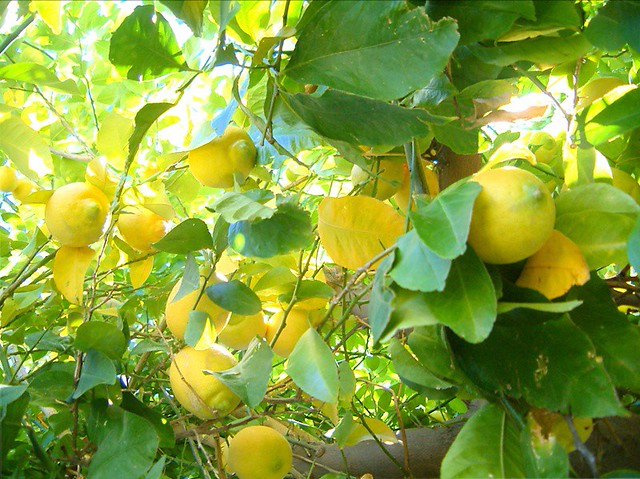
When life gives you liminality, make lemons or some other subtropical (or even tropical) fruit. For us here in hardiness zone 7, climate change will probably have us in zone 8 in a decade. My palm trees and peaches will feel right at home. To grow citrus or bananas, however, a little geoengineering will be needed by way of tweaking areas of our property where the microclimate can be pushed a bit further in the warm and humid direction. In Paradise Lot, +Eric Toensmeier and +Jonathan Bates offer many suggestions on expanding your hardiness zone.

Raingardens, ponds, and swales all contribute to higher ground-level humidity. Our future hops vines, growing at a angle to a height of 35 feet should also create a quasi-greenhouse beneath, especially with the compost pit dug into the ground near their base. We also want to leverage warm, sunny spots created by South-facing walls as good areas to tropicalize.

And for that, we have a secret ingredient. Biochar, with its low reflectivity, is a great infrared energy absorber, warming the soil. It also holds about 3x its weight in water. The elevated temperature and moisture create a high humidity zone in the immediate airspace above high biochar concentrations.

My tomatoes and peppers grow prolifically, in part, due to top-dressing with biochar. Where I have cut holes in the black plastic, I mulched with biochar to prevent weeds, capture moisture, discourage pests, and further decrease albedo. I add extra organic fertilizer when it's time to feed the plants, in order to adjust for the nutrient sink created by the biochar. Next season, the biochar will be already charged and populated with soil microbes so that it can be dug in and do long-lasting service in the ground. I prefer this technique over composting of biochar, as it saves time and effort (though compost plus biochar is a superior soil amendment).

Maximizing the biochar concentration in garden beds (up to 50% of soil volume) will produce similar results. The terra preta effect will move your garden to more equatorial climes. We have a lime tree that's been container-grown for 12 years, but one day it might find its place in the sun where the snow never sticks.


Thursday, June 9, 2016

Permasoil

Weeds like cypress spurge can establish themselves where nutrients are scarce, but most horticultural plants require more care and feeding in order to grow to their full potential. Nitrogen is the macronutrient in highest demand by vegetables, requiring most gardeners to supplement their soils with fertilizer at certain times in a plant's lifecycle. Farmers typically use aged manure as a nitrogen source, which may put their customers at slight risk of pathogens in their produce. Synthetic fertilizers are used by most non-organic farmers and gardeners, leaving a large carbon footprint and upsetting soil microbial communities. Compost adds some nutrients, but the nitrogen is typically consumed within six weeks.

Healthy soil has the ability to cycle nitrogen to plants from the activity of microbes with no outside supplementation. Healthy soil requires the presence of live plant roots throughout the year, e.g. cover crops, with no more than three weeks dead space. If one added compost at a high rate every year, the soil could become nutrient sufficient after many decades. In the meantime, a grower needs to fertilize in addition to using compost.

The missing piece from this discussion is biochar. Biochar raises the cation exchange capacity (CEC) of soil better and more permanently than compost, meaning more nutrients will be available to plants for a longer period. If small portions of biochar are added annually to a plot of land, poor soil health can improve to a self-sustaining level in only a decade or two because it harbors a plethora of soil biota. Once soil reaches that state, it becomes a treasured renewable resource rather than a recurring receptacle. Biochar that is pre-charged with nutrients and inoculated with microbes can bring soil to a regenerative state most quickly.
Photo by Willi Heidelbach (CC BY 2.0)

You can be a successful grower by relying on synthetic fertilizers, or you can be even more successful by following organic practices, including natural fertilizers and compost, but unless you grow on prime farmland already, you can only be fully successful in your lifetime if you use biochar. Until your soil gets to that point, keep the fertilizer handy (but please hot compost the manure).

Sunday, May 22, 2016

Breakthrough!

Fragipan is one thing, but what about soils that are highly compacted from the top down? This is a problem common in urban landscaping, and not uncommon in parts of suburbia as well. Compaction makes it hard to start and grow plants, including trees, which serve many important functions, especially in cities. The solution is excavation and replacement of the compacted soil with a suitable growing medium.
Photo of urban landscaping by thanh.ha.dang (CC BY-NC-SA 2.0)

In Stockholm, Sweden, one enlightened leader grasped the choice of replacement growing medium as an opportunity to introduce biochar into the mix whenever trees are being planted in civic landscaping projects. Biochar brings many advantages over commonly used peat moss, including its resistance to compaction. The biochar techniques used by Bjorn Embrén, head of landscaping for the city, were developed over decades and have shown stupendous results in the growth rate and survival of trees. The mixes they use include relatively little soil, but massive amounts of various grades of gravel and biochar. Tree roots find the open structure very accommodating.

Embrén's advice to cities who are interested in these techniques is "Dare to try it and you will be convinced!"  What we, in Maryland, must do first is make a few changes to the specifications for growing media in the Stormwater Design Manual, which dictates a loam/sand mix for infiltration devices. Adopting these techniques would make it possible to select from a wider range of vegetation in bioretention and filter devices, as biochar-based filters drain more quickly than those that rely primarily on soil.

At any rate, we shouldn't have to take the full development and test approach to begin adopting these designs - that part has already been done. All we need is a few delegations visiting Stockholm to see how to make them successfully. They can start by reading this manual. It is a bit old and doesn't use the term "biochar." The term they use instead, "structural soil," could have been key to adoption of the changes since it sounds so common sense and familiar.

Thursday, May 19, 2016

Biochar to Improve Soil Drainage and Save the Bay

In Maryland, the Environmental Site Design (ESD) standard for water runoff is that it should mimic woods in good condition. This is difficult when impervious surfaces are being added, since the water collected and treated in stormwater management devices must then exceed what would be impeded and filtered if woodlands completely covered the unbuilt portions of the site, i.e. the additional effectiveness required increases with the amount of impervious surface introduced. The Design Manual qualifies the standard to require that it be achieved to the Maximum Extent Practicable (MEP). This is not as big of an escape clause as it may appear, since the manual also includes a checklist that helps determine whether the design process demonstrates a sincere MEP effort.

The idea of using wooded areas as the standard for all sites is very suitable for Maryland, as a glance at Google Earth will show how very wooded our state is. Yet, rumor has it that the next update to the manual will not be so stringent. As it is, the absolute minimum standard already obviates the wooded area criteria, if it turns out to be impractical on any given site. That minimum standard in the eastern part of Maryland is to design stormwater devices to hold an amount based on 1" of rainfall, ensuring that a specified portion of that water volume drains into the ground to recharge the aquifer. I hope they hold to the more rigorous ESD standard because the Chesapeake Bay will flourish if we can insulate it from the effects of our exploits on the land.

Photo by Birgit Speulman (CC BY-NC-SA 2.0)
Deep biochar-soil mixtures in planting beds would be an effective way to improve drainage, thus helping to meet the recharge volume requirement. Wet ponds are preferred to dry ponds, but you get less aquifer recharging since the water drains slowly in a wet pond. What you could do is use biochar to improve drainage of combination pond forebays, possibly allowing smaller overall pond size.

Here in Southern Maryland, we have a lot of Beltsville soils which are typified by a fragipan layer that is practically impenetrable. It may even reform after being broken up. Here again, biochar could help if it could be injected in fragipan layer breaches, preventing it from reforming. For the gardener, this might involve digging with a post hole digger and dropping biochar into smaller holes that have been chiseled through the fragipan. This would improve drainage considerably and, if the biochar was inoculated first and enough added, eventually eliminate the fragipan through microbial action.

Sunday, April 24, 2016

Beyond Chemicals

While I see a need to have soil restoration promoted in the next version of the Calvert County Comprehensive Plan, there are already many elements of the plan and ongoing institutions promoting soil conservation. The Comprehensive Plan includes "Sediment flows from development and farming" as a threat to the vision that
Our wetlands, streams, and forests support thriving plant and animal communities.
The corresponding action is "Develop soil conservation and water quality plans for farms."

When you look into the Best Management Practices of the Soil Conservation District, it appears that they have this whole issue pretty well in hand (at least among the farms on the list of cooperators). Many of these best practices lead to soil restoration in addition to soil conservation. At least one of the BMPs, however, is potentially counterproductive - that is, perpetuation of chemical fertilizers.
Photo by Paul Riismandel (CC BY-NC-SA 2.0)
The problem with chemical fertilizers is that they can reduce the soil biota population below a critical level where the microorganisms make the soil ecosystem work in the plants' favor. This results in the need to use more fertilizer to achieve the same results as in previous years and the soil undergoes a death spiral until it is no longer economical to farm.  Many of the trace nutrients used by plants are generated by the proliferation of soil microorganisms and could be uneconomical to add directly as we do commonly applied macronutrients like Nitrogen, Phosphorus, and Potassium (N, P, K).

It may be possible to restore soil humus by intensive farming methods while still using chemical fertilizers, but a surer method is to farm organically using biochar, compost, and organic fertilizer, as necessary. The goal should be to eliminate fertilizers altogether in favor of creating humus which is self-regenerating as long as crops are grown successively and rotated from year to year. Our farmers, large and small, need to learn to do this if for no other reason than that chemical fertilizers are a nonrenewable resource. A better option, still, is to grow perennial food crops. While we're at it, let's take advantage of soil carbon restoration for its role in cooling the planet.


Friday, April 22, 2016

Mitigating Sprawl

Photo by Matt McGuire (CC BY-NC-SA 2.0)
The information session on the rewrite of Calvert County's Comprehensive Plan offered many insights on the process, current viewpoints, and the situations we face. Attendees were given an opportunity to submit views on paper regarding the top challenges, changes witnessed, and delights of living in Calvert County. Mine were soil tilth, invasive species, and nature, respectively. The presentation that covered some of the trends since the last major plan rewrite in 2004 brought a related problem to light - land use.

According to the statistics presented, the amount of both farmland and forest lost in our county over a ten year period is approximately 5%. As of 2007, about 60% of the county was forest or farmland. A 5% loss would have brought that figure down to about 55% as of 2014. The National Forest Service projections for forest land in Maryland under various scenarios are for additional losses ranging from 20 to 30% by 2060. If farmland losses remain in step with forest losses, we are then looking at a combined loss rate in Calvert County that continues at more than 5% per decade and at least 23 square miles (15,000 more acres) sacrificed to the god of growth.

In a talk given to the county's Master Gardeners last year, the crisis of ongoing suburban sprawl was also highlighted, with the point made that this results in a loss of connectivity in our ecosystems, reducing biodiversity. The reason Master Gardeners need to understand this is because increasing biodiverse gardens are one small way to mitigate the effects of sprawl on wildlife corridors. By ubiquitously gardening in islands within the developed landscape, the hope is that many of the threatened wee beasties will be able to find sufficient food and shelter.

I wrote down my three responses to the planning questionnaire (soil tilth, invasive species, and nature) before seeing the statistics on land use. In retrospect, it is easy to see a relationship of these three key indicators to the issue of real estate development. The soil that we grow on must be improved, especially if there is going to be less area under cultivation. Invasive species must be curbed in an effort to mitigate the loss of biodiversity caused, in part, by sprawl. Nature, in general, must be given more consideration and care as we continue to spread out across the land. These are action areas that I would like to see promoted in the next Comprehensive Plan update.

Sunday, April 10, 2016

Remedial Reading for the Maryland Climate Change Commission

Before we can expect the Maryland Commission on Climate Change to take biochar seriously as a carbon sequestration tool, we have to educate them more on the mechanisms which make it such a favorable option. In the latest update to the Maryland Greenhouse Gas Reduction Plan, biochar is cited as a promising emerging technology, but carbon farming is given only 0.4% credit for reductions planned by 2020. The real potential of biochar alone is more like 12%.

The Emerging Technologies Appendix does not mention biochar, but the 2015 plan update has a paragraph in the Emerging Technologies chapter, saying
biochar is made "by heating vegetation slow without oxygen" 
(it's made by heating a carbonaceous biomass, e.g. wood, ag waste, manure, fast or slow with little or no oxygen, depending on the process). Inputs could be "lumber waste, dried corn stalks and other 168 Maryland Department of the Environment plan residues." 
"The resulting biochar... can be placed in the soil as fertilizer." 
(It is a soil amendment, which improves many soil properties, including preservation and reduction of added fertilizers.) 
"However there are some risks to keep in mind to ensure that it remains carbon negative and doesn’t harm the soil it is meant to be fertilizing." 
Rarely would biochar cause lasting harm to soil. The long term benefits would outweigh short-term yield reductions. 
"Biochar must be used in soils of similar pH or else it can have a negative effect on soil fertility." 
Biochar could change pH in the short-run, but these changes are predictable, depending on the biochar feedstock and production method, and it can be applied discriminately. 
"If the biochar is made from forest ecosystems, the result could be a net increase in greenhouse gases." 
That final jab is the bugaboo that many biochar skeptics raise, fearing deforestation as an industrial means of obtain biochar feedstock. Sustainable forestry should trump biochar production as a general principle in crafting environmental regulations, but the two are far from mutually exclusive. It's also a reason why economies of scale should not be allowed to run rampant in the biochar industry. 

Positive publicity about biochar is growing. An authoritative article in Nature last week pointed out that the theoretical potential for soil to sequester carbon is 80% of the rate at which it is currently being added to the atmosphere by humans. That sure makes the Maryland Climate Change Commission carbon farming target of 0.4% look weak. The French initiative, 4 pour 1000, adopted by several other countries at the Paris climate conference, to increase soil carbon 0.4% through carbon farming is another inducement to put biochar on the entrée menu.

Monday, April 4, 2016

Exposing the Exposers

We are at the point that concerned citizens must hold the cold feet of anyone whose responsibility it is to uphold environmental laws close to the fire. +Albert Bates says that this is a civic duty brought to the fore by the revolutionary mandates of the Paris Agreement, as the preeminent example. The fate of humankind hangs in the balance.

Though easily jaded, I am not ready to begin my civic action efforts with civil disobedience, though there may come a time when roaring becomes my M.O.  A lot of leftist literature seems to be written by fanatical, poor-men's Donald Trumps, to borrow from The Flaming Lips. Less hostile steps may win the day in some cases, though escalation may ultimately lead to destructive behavior.

A template for reasonable objections to offending parties dealing with watershed protection regulations is provided by Community & Environmental Defense Services, offering an actionable alternative to raising hell. I noticed one glaring case in my community where Dominion Corp's contractor, IHI/Kiewit, has piled up excavated soil from the Cove Point LNG plant expansion and does not seem to protect it well from erosion.


One side (not pictured) is mostly covered with new turf, but the remainder does not seem to get the attention it should. The simple principle that Exposed Soil = Pollution makes this small mountain of dirt a likely pollution problem. The silt fence cannot be expected to catch more than half of the soil that reaches it, with the rest eventually settling in streams and ponds in the Gray's Creek subwatershed, and, ultimately the Chesapeake Bay.

I may not be fanatical or even a radical, but after Dominion's callous treatment of concerned citizens during the hearings on the LNG plant construction, I'll be ready to take the gloves off this time.

Wednesday, March 23, 2016

Getting Cred to Help the Watershed

Rain barrels are one of many changes you can make to your property for stormwater management. BayWise certification process and reading +Michael Judd's book, Edible Landscaping, I hadn't realized how important erosion control is to gardening. The organic layer of a garden is the first to wash away, so getting control of how rainwater flows is a must in setting up any planting area. The main things are to reduce the velocity of runoff and to capture nutrients before they escape.
The University of Maryland Extension notes many other features which I have incorporated into my hilly property, such as rain gardens, conservation landscaping, swales, fertilizer reduction, a pet waste station, and tree planting. Before going through Maryland's

Stormwater management is not the most tantalizing task, even less so when it requires many hands. That is why, in setting up a curriculum for the Watershed Stewards Academy, the University included lessons on educating and motivating groups to take action. County ordinances, such as Calvert's offer a negative incentive to meeting minimum standards, i.e. do it, or we will do it for you (on your dime). Right now, my church faces a choice between taking the initiative or the risk of getting negatively incentivized to remediate the erosion that has occurred over the past several years into their detention pond.

A motivator of those who seek certification through the university extension as a Master Watershed Steward Volunteer, or Master Naturalist Volunteer, or (in my case) Master Gardener Volunteer is the scale at which you can hope to have an impact.  It's not just on your own property, but in many parts of the locale.

Water is every bit as critical to our future as food, and even more urgent. Expanding local applications of biochar and mycorestoration as well as the exigent need at my church could draw me into making the jump to the Watershed Steward program, ne: Master Gardener. There is only a little while to decide, since the application deadline for the next class is April 22. There are information sessions tonight (March 23) and next Thursday for anyone interested.

Saturday, March 5, 2016

How to Make Forests Renewable

A number of Maryland counties give out awards to people and businesses for excellence in recycling. This year, Calvert County has followed suit. I am deeply involved in recycling for the purpose of building better soil and would like to apply for one of the awards in order to bring more publicity to the potential for recycling woody waste in the form of biochar.

My recycling bona fides could also include acceleration of carbon cycling, which is a major element of what +Paul Stamets describes as mycoforestry. When forests are logged unsustainably (as they have been repeatedly in the U.S. since the settlers arrived), then many of the extant fungi have nothing to feed on after a few years and they die away. This interrupts the carbon cycle, reducing the quality of soil with every new tree harvest. The remedy Stamets prescribes is to insure that logging residues are left in close contact with the forest floor. This gives saprophytic fungi the opportunity to thrive on the dead wood, enriching the soil, leading to more rapid regrowth, giving the endophytes and mycorrhizae an opportunity to bridge the gap.

As a forest gardener, I like to get wood chips dumped on my property to use for food forest patches. The chips could well end up as mulch elsewhere, but when my place is closer, the tree guys would just as soon leave them with me. Either way, it's recycling, but I get it down to the soil fungi right away by keeping the chips no more than 1 foot deep. After 6 months, I add horse manure and biochar to accelerate the composting process, engaging a host of other microbes to break down the dead wood into food for plants.

In addition to encouraging persistence of native mycelia subsequent to logging, Stamets suggests dusting new tree roots with edible mycorrhizal mushroom spores before planting. Some of the recommended species are chanterelles on oaks and sweet tooth on conifers. That means going back to harvest the mushrooms in subsequent years. If these edible mushroom spores are used, then it isn't a good idea to also include spores for other non-mushroom-producing mycorrhizae, because they tend to outcompete the edibles. Sweet tooth also can be found under other deciduous trees, so I might try out this suggestion when I begin planting my forest garden.


Wednesday, February 10, 2016

Wholesome Eating

My enthusiasm for gardening built on my interest in biochar, but we have an even more compelling reason to seek abundant vegetables. When you garden, your sunk costs burden you to recover as much as you can by consuming the fruits (and vegetables) of your labors. Dietary guidelines point out that eating vegetables is key, especially for those plagued by diabetes. Since my wife has that condition and my father contracted it in his demise, gardening may be one of the best things we can do.

Last year's crop brought in enough food to overflow our shelves with canned pickle and tomato products. I expect that to happen again as our soil becomes healthier every year. Biochar is to thank for much of that improvement, but drip irrigation under black plastic sheet, decayed wood chip mulch (fostering more mycelium), cover crops, legume inoculants, double digging, pollinator host plants, forking vice plowing, compost, mycorrhizae additions, crop rotation, keeping soil covered, soil sampling and nutrient adjustment, and opening the canopy for more sunlight all have helped. This year, I am hoping to incorporate Garden Giant mushrooms in planting beds shaded by taller crops such as sorghum, tomatoes, eggplant, and lima beans. These mushrooms, in addition to being deliciously healthy to eat, are helpful to their garden companions' growth and yields. 

Another mushroom we are hoping to see more of this year is the oyster. We have been blessed with a patch of this found growing naturally near one of our gardens, and since, have tried to cultivate it on logs in brown, blue, and yellow variations. So far, we have had little luck. I grew some on coffee ground this year, but the yield was very low. With oyster mushrooms, we could receive many benefits to counter diabetes including decreased obesity and regulated blood sugar. 

We inoculated some logs with lion's mane mushroom spawn last year, and would love to see those come to fruition. Lion's mane could help regrow some of the deteriorated nerves in my wife's feet that cause her debilitating pain. If we ever see maitake mushrooms fruit from the buried logs we went to great lengths to cultivate last year, they may also help with blood glucose. 

Where we had the most immediate success so far, is shiitake logs. This year should be tremendous for shiitakes with ten times as many logs prepared. By fall, we should be harvesting armloads! Shiitake improves immunity, blood pressure, sugar, cholesterol, the cardiovascular system, and the digestive system.  It has antiviral, antibacterial (e.g. strep, staph, candida), and anti-inflammatory qualities. Something new I am trying with shiitakes is to make an alcohol extract from them. This will make certain beneficial compounds available to take in easy spoonfuls, rather than rely on cooking the mushrooms daily.

Local folk who want to hear a bit more about the benefits and methods of cultivating mushrooms are welcome to attend the March meeting of Calvert Eats Local where I will be giving a presentation and sharing a delicious shiitake dish.

Friday, January 29, 2016

Paradise Shift

A friend of ours used to be a landscape gardener in Florida.  When she moved to Maryland, I observed to her that landscapes in Maryland looked like they could use a Florida touch. After consulting the book Edible Forest Gardens by Dave Jacke and +Eric Toensmeier, I think I see why Florida's gardens do so well by comparison. The obvious factors are that Florida is flat, making it easier to work the land, there is more sunshine there, and that the many retirees in Florida are more inclined to gardening. As you move north from Florida, the ground stays flat for hundreds of miles, yet crops struggle to grow. As the book shows in Feature Article 4, there are areas of the country where the parent material of the soil (the C horizon) predominantly supplies the lowest amount of plant nutrients of almost anyplace in the world. One of those areas is the Southeast, from Georgia all the way up to Maryland. The C horizon there consists of a geological class called "ultisols."

Other advantages of Florida gardeners, i.e. the concentration of retirees and the sunshine, might be obviated by financial catharsis returning us to agrarianism and by a steady shift of climate northward with increases in global warming. While flat ground may be an advantage now, the low elevation of the state of Florida will also be its undoing, as it is eventually inundated with the rising ocean. On the other hand, the elevation of our land in Maryland may be just high enough to become waterfront property for our children to inherit.

In the meantime, dealing with the ultisol nature of our land will be an ongoing project. According to Jacke and Toensmeier, ultisols require "careful nourishment during early forest garden succession and tight nutrient cycling for the duration." When they wrote these words, the authors hadn't become familiar with biochar and its ability to serve as a nutrient sponge in the soil. Since then, however, Toensmeier has teamed up with +Jonathan Bates who is an advanced user of biochar. Together they have created an idyllic forest garden on just 0.1 acres of their Holyoke, MA residence. Their book, Paradise Lot, tells all about it. For a quick look, Geoff Lawton paid them a visit and posted a free (other than the price of registering your e-mail address) video to pique your appetite.

Tuesday, January 26, 2016

Accelerating Eden

Biochar will accelerate formation of topsoil, but ten years is a long time to wait. In my ignorance, five years ago I set up two garden beds using the native loamy sand that remained after our property addition was leveled. The results were so meager that forest vermin weren't even stopping by for lunch. The next few years were progressively more productive after successive additions of compost and biochar enriched the channery soil. Last year, I decided to expand with a new bed by using a method known as lasagna gardening. Also known as sheet mulching, lasagna gardening entails putting down layer after layer of organic matter on top of a poor growing surface, then waiting six months for it to break down enough to plant.  The up front work was considerable, but I was well rewarded with a bed that was more bountiful than the two that had been enriched year-by-year with biochar and compost.  (Biochar and compost were also ingredients in the lasagna garden.)  The takeaway is that, with poor soil, you don't have to wait ten years for a productive garden. You still have to add layers to a lasagna garden every year and dig it all in, but if biochar is included, even that can cease after ten years.

This year, I made two beds using sheet mulching and a very deep compost bed, following the same approach, in which I plan to grow mushrooms. My future forest garden patches will be grown out of sheet mulch, also. Perhaps the hardest part about lasagna gardening is getting enough of the right ingredients, green material, in particular. I've had to reach out to acquire enough of this high nitrogen material for my beds. I collect buckets full of used coffee grounds from a local doughnut shop and tons of horse manure from a local stables. It is best to pre-compost manure with straw or other brown material, before adding to the lasagna garden, in order to kill pathogens by the heat of composting. I'm looking at integrating my acquisition of green material onsite through raising chickens. Geoff Lawton explains how.

Featured Post

Git 'er Done

By Mark Rain T o get them all done in time to avert ecological armageddon, the thirteen prescriptions for healing the planet offered by...