Showing posts with label forest gardens. Show all posts

Sunday, May 20, 2018

Going Tropical

I've got rain on the brain. After listening to a local presentation last week on "Gardening in a Changing Climate," the monsoon arrived on cue. We have received 15" of rain in the past week. Normal is 4" for the entire month. More intense storms are an expected consequence of global warming and increased rainfall in the Mid-Atlantic states is the general outlook from climate models.

Time to brush up my knowledge forest gardening, but more particularly agroforestry (or its more ecological cousin, climate eco-forestry). Trees need a lot of water and, with our increasing rainfall, growing trees should be easier here. Ironically, my understanding of sustainable forestry leads me to conclude that I have too many trees growing on most of my property. That is, they, like people, over-propagate when left unattended, making life more difficult for all of them. Culling selected trees to grow mushrooms and make biochar will open up space for many of the more desirable trees and for planting new species.

The species added could be selected for their usefulness as food, lumber, fuel, or in making biochar and even bio-oils. All of these have potential to draw down atmospheric CO2. For example, according to a 2014 study, building with wood could reduce annual global emissions of carbon dioxide by 14 to 31 percent. Another, more recent, study estimates that drawdown to the 1.5 ⁰C increase stated as the Paris agreement goal is completely within the capacity of a biocarbon-producing world if everyone does their part with the land under their care. According to Project Drawdown, an acre of multistrata agroforestry can achieve rates of carbon sequestration that are comparable to those of afforestation (ranked 15th by Drawdown ) and forest restoration—2.8 tons per acre per year, on average. This fits my situation well, since multistrata systems are well suited to steep slopes.

My choice for a biocarbon crop might be bamboo. According to Albert Bates, bamboo is the second fastest growing plant on Earth, after microalgae. It will double its biomass every year if conditions are right. Running varieties can expand as far out from their base in one year as they are tall, and do it again the next year, and the next. Some edible shoot running types that would be good in zone 7b are the 10' Chishima-zasa (Sasa kurilensis) and the 30' Sweetshoot Bamboo (Phyllostachys dulcis).  They grow in full sun or partial shade and make great barriers - just the thing to avoid panic attacks by neighbors over distant sightings of my flame cap kiln or TLUD oven in operation.

Sunday, March 5, 2017

Future Farmers of America: You and Me

If the U.S. collapses all the way back into a herder/cultivator society, that should alleviate many of the problems inherent in our food system, but it won't necessarily protect us from the ravages of climate change. But, since farming will be so popular, more people could learn climate farming. Jacke and Toensmeier, in Edible Forest Gardening, express the opinion that food forests will be essential to feeding the population, given the pressures of climate, energy, and biodiversity. +Albert Bates is writing a series that discusses climate ecoforestry, which includes agroforestry along with permaculture. The Green Party platform includes many important points on the topic of forestry, but fails to explore its vast potential for restoring the environment and creating livelihoods.
Apple tree, comfrey and currant bush guild by London Permaculture

Over the past four years, I have become minimally adept at making and using biochar, gardening, raising mushrooms, and mitigating stormwater runoff. Forest gardening is an ongoing interest. Now would be a good time to get close to communities and organizations which practice the many and expanding methods of forest restoration and permaculture. Few who aren't indentured to the powers that be will be able to find any other means by which to live.

More to come on this subject, but keeping it brief this time leaves you more time for the inspiring reads linked above.

Tuesday, July 12, 2016

Losing Native Naivety

Our walk to the Elms Environmental Education Center's pond last week was preceded by a slide talk about the importance of using native plants in watershed protection projects. The point was made by +Kurt Reitz, our gracious host, that the reason we want native plants is for the insects.
Photo by Tim Hynes
It takes a while to pull that thread, but what it amounts to is that plants feed insects and insects feed animals and native plants are evolutionarily adapted to the food chain of their area.

I become a little indifferent to the native plant appeals when I recall that I have a food chain that currently doesn't rely on foraging and hunting. In the expectation that this could change rather quickly, I am endeavoring to establish a food forest around my home, but not strictly using natives. Planting natives is a very helpful environmental practice, but environmentmental restoration still takes a back-seat to survival. However, as our fossil-fueled supply chain falters, rejoining the local food chain may become essential to survival.

The more I garden, the more I take pleasure in growing ornamentals. Yet, future reliance on agroforestry for a multitude of resources that will no longer be derived from or made using fossil fuels deters me from planting lots of native ornamentals mainly for environmental preservation.

There are some edible natives, however, that deserve a place in my forest garden. These include: Paw-paw, persimmon, gooseberry, black raspberry, blackberry, blueberry, and elderberry. I already have everything but the first and last of these. They aren't all that I wish to grow in the way of edibles, so non-natives will be in the mix. Then there are the less edible plants that provide other key functions in support of cultivated trees, including the insectary role. The time it takes to harvest, preserve, and consume or distribute the perennial bounty will ultimately determine where my forest farming ends and ornamental gardening begins.

Wednesday, June 15, 2016

Your Own Little Rainforests

Lawns do a fair job of capturing runoff, but just putting an average-sized house on a lot can double the amount of runoff from that property. Much of that increase is channeled to gutters and then downspouts, at which point an owner can take a number of further measures to reduce problems downstream. Outlets from downspouts, be they splash blocks or French drains will often evince erosion where the water is let loose to run freely on the soil. This is the place to intervene with a rain barrel and/or a swale. These may still lead to erosion wherever the water discharges, so a garden can be added to infiltrate the excess.

By concentrating the captured runoff, areas of Maryland properties typically receiving 44 inches of rainfall per year can easily get double that amount, making them like miniature rainforests.  Forest gardens are very good absorbers of groundwater, as are rain gardens.
Photo by Dion Gillard

One of my rain barrels discharges through a 25 foot garden hose into a French drain which discharges to a rock filled swale that empties into a rain garden 80 feet from the house. That easily meets the minimum distance requirement of 15 feet from the foundation and is also at a low point on the corner of my property. The rain garden contains a good deal of biochar and compost and I am planning to fill the cracks between the swale rocks with biochar once I obtain plants that grow well in rock gardens. I also have rain barrels for the other three downspouts on my home, two of which are for keeping mushroom logs watered and one for watering the five terraced garden beds in the backyard.

For water coming off an impervious surface such as a patio onto a lawn, a swale or series of them can be added that run on contour. These are interspersed with raised bed gardens that use the water captured by the swales. Yards with slopes up to 33% can use this device, so where such slopes themselves are the source of runoff, these would also be very helpful. The key to making all these alterations efficacious is gardening. To some that may create the impression of unending toil, but it needn't since the gardens will be watered by the rain flowing to them and can be kept moist and fed with the help of biochar.

Tuesday, March 8, 2016

Fight Fungus with Fungus

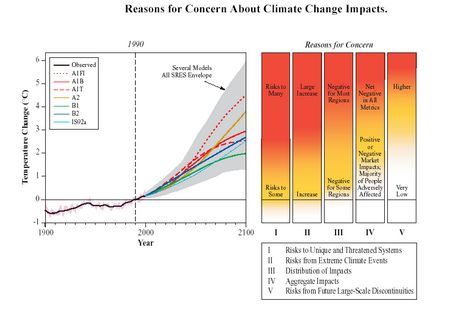
The rise in global temperature is alarming. The IPCC has told us what will happen if temperatures climb 5 C.
The COP-21 agreement aims to keep it to 1.5 C (already baked into the cake), but 2 C at the high end. The effects of that will be bad enough, but don't expect that this limit will be maintained unless we do two things in the very near term: (1) stop expanding fossil fuel extraction (and put an immediate moratorium on fracking while the truth about methane leakage is investigated) , and (2) reforest, (especially in the tropics). A new study points out that we can sequester carbon much faster by regrowing forests in devastated tropical areas than by simply maintaining the remaining old growth forests.

Tropical rain forests are not the only ones at risk from climate change. The U.S. Forest Service just put out their futures projection of the northern forests, which extends all the way down here to Maryland. The outlook is grievous with myriad environmental insults being thrown at the forest ecosystems faster than they can respond. Our intervention is needed to preserve these forests and to restore their health. Perhaps the best way to do this is through improving soil health.

While mycorrhizal fungi is conducive to healthy trees, running saprophytic fungi is even more fundamental, as it builds healthy soil. At the same time, some strains can dominate fungal parasites that capitalize on the stresses imposed on forest ecosystems by climate change and population growth.

Some of the edible species +Paul Stamets recommends for this, I already grow (oyster mushroom, garden giant, and turkey tail). Other recommended species include clustered woodlover and psilocybes. Mycelium can be cultivated very rapidly and then moved into damaged or threatened woodlands. One indicator for the best places to run mycelium is the presence or absence of dominant saprophytic species. These mushrooms fit well in forest garden patches, since the gardener is more likely to be there when they are ready to pick. In either case, eating these mushrooms requires a more rigorous identity verification since they are growing among other, non-edible types.

Saturday, March 5, 2016

How to Make Forests Renewable

A number of Maryland counties give out awards to people and businesses for excellence in recycling. This year, Calvert County has followed suit. I am deeply involved in recycling for the purpose of building better soil and would like to apply for one of the awards in order to bring more publicity to the potential for recycling woody waste in the form of biochar.

My recycling bona fides could also include acceleration of carbon cycling, which is a major element of what +Paul Stamets describes as mycoforestry. When forests are logged unsustainably (as they have been repeatedly in the U.S. since the settlers arrived), then many of the extant fungi have nothing to feed on after a few years and they die away. This interrupts the carbon cycle, reducing the quality of soil with every new tree harvest. The remedy Stamets prescribes is to insure that logging residues are left in close contact with the forest floor. This gives saprophytic fungi the opportunity to thrive on the dead wood, enriching the soil, leading to more rapid regrowth, giving the endophytes and mycorrhizae an opportunity to bridge the gap.

As a forest gardener, I like to get wood chips dumped on my property to use for food forest patches. The chips could well end up as mulch elsewhere, but when my place is closer, the tree guys would just as soon leave them with me. Either way, it's recycling, but I get it down to the soil fungi right away by keeping the chips no more than 1 foot deep. After 6 months, I add horse manure and biochar to accelerate the composting process, engaging a host of other microbes to break down the dead wood into food for plants.

In addition to encouraging persistence of native mycelia subsequent to logging, Stamets suggests dusting new tree roots with edible mycorrhizal mushroom spores before planting. Some of the recommended species are chanterelles on oaks and sweet tooth on conifers. That means going back to harvest the mushrooms in subsequent years. If these edible mushroom spores are used, then it isn't a good idea to also include spores for other non-mushroom-producing mycorrhizae, because they tend to outcompete the edibles. Sweet tooth also can be found under other deciduous trees, so I might try out this suggestion when I begin planting my forest garden.


Friday, January 29, 2016

Paradise Shift

A friend of ours used to be a landscape gardener in Florida.  When she moved to Maryland, I observed to her that landscapes in Maryland looked like they could use a Florida touch. After consulting the book Edible Forest Gardens by Dave Jacke and +Eric Toensmeier, I think I see why Florida's gardens do so well by comparison. The obvious factors are that Florida is flat, making it easier to work the land, there is more sunshine there, and that the many retirees in Florida are more inclined to gardening. As you move north from Florida, the ground stays flat for hundreds of miles, yet crops struggle to grow. As the book shows in Feature Article 4, there are areas of the country where the parent material of the soil (the C horizon) predominantly supplies the lowest amount of plant nutrients of almost anyplace in the world. One of those areas is the Southeast, from Georgia all the way up to Maryland. The C horizon there consists of a geological class called "ultisols."

Other advantages of Florida gardeners, i.e. the concentration of retirees and the sunshine, might be obviated by financial catharsis returning us to agrarianism and by a steady shift of climate northward with increases in global warming. While flat ground may be an advantage now, the low elevation of the state of Florida will also be its undoing, as it is eventually inundated with the rising ocean. On the other hand, the elevation of our land in Maryland may be just high enough to become waterfront property for our children to inherit.

In the meantime, dealing with the ultisol nature of our land will be an ongoing project. According to Jacke and Toensmeier, ultisols require "careful nourishment during early forest garden succession and tight nutrient cycling for the duration." When they wrote these words, the authors hadn't become familiar with biochar and its ability to serve as a nutrient sponge in the soil. Since then, however, Toensmeier has teamed up with +Jonathan Bates who is an advanced user of biochar. Together they have created an idyllic forest garden on just 0.1 acres of their Holyoke, MA residence. Their book, Paradise Lot, tells all about it. For a quick look, Geoff Lawton paid them a visit and posted a free (other than the price of registering your e-mail address) video to pique your appetite.

Tuesday, January 26, 2016

Accelerating Eden

Biochar will accelerate formation of topsoil, but ten years is a long time to wait. In my ignorance, five years ago I set up two garden beds using the native loamy sand that remained after our property addition was leveled. The results were so meager that forest vermin weren't even stopping by for lunch. The next few years were progressively more productive after successive additions of compost and biochar enriched the channery soil. Last year, I decided to expand with a new bed by using a method known as lasagna gardening. Also known as sheet mulching, lasagna gardening entails putting down layer after layer of organic matter on top of a poor growing surface, then waiting six months for it to break down enough to plant.  The up front work was considerable, but I was well rewarded with a bed that was more bountiful than the two that had been enriched year-by-year with biochar and compost.  (Biochar and compost were also ingredients in the lasagna garden.)  The takeaway is that, with poor soil, you don't have to wait ten years for a productive garden. You still have to add layers to a lasagna garden every year and dig it all in, but if biochar is included, even that can cease after ten years.

This year, I made two beds using sheet mulching and a very deep compost bed, following the same approach, in which I plan to grow mushrooms. My future forest garden patches will be grown out of sheet mulch, also. Perhaps the hardest part about lasagna gardening is getting enough of the right ingredients, green material, in particular. I've had to reach out to acquire enough of this high nitrogen material for my beds. I collect buckets full of used coffee grounds from a local doughnut shop and tons of horse manure from a local stables. It is best to pre-compost manure with straw or other brown material, before adding to the lasagna garden, in order to kill pathogens by the heat of composting. I'm looking at integrating my acquisition of green material onsite through raising chickens. Geoff Lawton explains how.

Monday, December 21, 2015

Climate Refugees

Did you notice the environmental subtext in the latest Star Wars movie contrasting the despoiled, brown desert world with the overgrown blue-green planet where freedom reigns?  It strains credulity to think that life could be sustained as depicted on the desert planet, while the blue-green planet offers a multitude of niches where creatures could luxuriate.  Earth is a mix of these two worlds, but with the desert gaining more ground every year.

Included in the desert are many cityscapes that are denuded of flora, paved over, serving as commons for swarms of seemingly unconcerned occupants.  This has been our direction since the time of Nimrod and the industrial revolution magnified the devastation many times over.  David Holmgren classes the two types of environment as results of brown- and green-tech.

Maryland is on course for more land "development" in the years ahead, but forest canopy cover is required to be a minimum of 40%, meaning we won't end up like the desert planet.  Other parts of our country will, namely the half west of the Mississippi (excluding the Northwest).  We and our neighboring states are sure to be the recipient of millions of internally displaced people (IDP's) coming from those deserted areas.  We will have to show them how to live a green-tech existence, e.g. forest gardening, if they are not to desertify our end of the continent, as well.

Masses of Arabs huddled around an occasional jihadist are yearning to be free of the civil wars in their desert homelands.  How able, not to mention willing, are we to rescue these refugees when there will soon be millions of our own in similar plights?  How about we settle any of these desert-acclimated migrants in the hot, dry West?  Perhaps they can show some Americans how to deal with the desert and when ours can't stand the heat any longer, maybe we will have learned how to accommodate refugees well enough to settle westerners in the florid east.

Tuesday, December 15, 2015

Fruits and Nuts

The forest garden I intend to plant will consist of 25 black walnut trees and several compatible species.  That limits the field to only a few species which don't seem to mind the juglone (5-hydroxy-alphanapthaquinone) that black walnut roots secrete.  A recommended native plant guild for black walnut* from Maryland permaculturist Michael Judd consists of:

  • Goumi bush - producing a juicy, red berry in June (use 2 varieties; won't tolerate wet soil)
  • Persimmon* - delicious Diospyros (Food of the Gods) virginiana (requires full sun; dioecious {requires a male tree}; half the height of black walnut)
  • Paw paw - custard cream tropical fruit for making smoothies (full sun best; half the height of persimmon)
  • Mulberry - exotic berry flavor (tolerates shade; a bit larger than paw paw tree)
  • Currants - tart to sweet from black to pink nutritious berries (a shrub that grows well next to trees)
  • Black raspberry - (not out-of-control like blackberries)
  • Alpine strawberry - smaller fruit than commercial varieties (ground cover)
  • Elderberry* - small, juicy fruit in June/July (likes wet soil, so double up the biochar; to 12')
  • Goldenseal - flowery (medicinal) herb
Available cheap through the Maryland online nursery.  Plant one in every patch.

If there is any room left over in some of these patches, other plants might be considered for inclusion. Everything else should be planted 50 feet or more away from the black walnut to prevent juglone poisoning, which means all these patches have to be well away from my existing plantings.


Saturday, December 12, 2015

A Candy Store

Speaking of treasure troves, stumbling across the new Maryland online nursery has opened up a glorious new chapter in my forest gardening efforts.  Whereas, formerly, the only affordable and accessible source for me to buy native plants was the annual Master Gardener plant sale in Prince Frederick, where I would have to pay at least double the online nursery price, plants are now available online throughout the growing season and early orders are possible.  A minimum order of 25 plants is required and a minimum shipping charge of $20 applies to each order ($30 if your state doesn't adjoin Maryland).  Considering that retail nurseries charge over $150 for a young tree, and you could get 150 seedlings at this website for that price, it's a huge bargain.

This outlet is not for commercial resellers.  As the DNR website stipulates:

"Landowners who purchase seedlings from the John S. Ayton Nursery agree to:
  • Provide a planting report upon department request
  • Protect plantings as much as possible from fires, grazing animals and trespassers
  • Keep live, rooted trees in place (trees with roots attached may not be uprooted for sale as live or ornamental trees)"

If you are on the Eastern shore and want to see the farm with over 3 million seedlings, their address is:

John S. Ayton State Tree Nursery
3424 Gallagher Road
Preston, MD 21655,

(a place sure to appeal to at least one of my loyal readers ; )


Rather than rush into ordering, my focus will first be on establishing food forest patches where the seedlings can be planted throughout my property.  This process of sheet mulching requires a year for wood chips and leaves to break down before planting can begin.  My goal is at least 25 patches on my property ready for planting by 2018. 


Wednesday, December 9, 2015

Please Don't Feed the Algae


Global warming isn't the primary cause of all environmental problems, but it still plays a hand in most.  Take the Upper Middle River outside of Baltimore where, last month, 200,000 fish were suffocated by an algae bloom that led to anaerobic conditions in the water.  The algae bloomed from a combination of warm temperature and an over-abundance of nutrients in the water.  When the weather cooled, the algae died, decaying through a chain of microbial feeding frenzies that consumed dissolved oxygen and released toxins damaging fishes' gills.  Dead fish compounded the effect of dead algae. Not to say that we will suffocate from all of the die-offs occurring around us (though the oxygen concentration in our air is falling), but this is an example of how the fate of a lesser ecosystem occupant can dramatically affect higher species.

The Maryland Department of the Environment has not identified any single pollution source as the trigger for the algae bloom, but leaves open the possibility that an accumulation of nutrients (read "fertilizer") could be to blame. It will be poetic justice when, in the coming decades, the rising seas reclaim the land surrounding this Chesapeake Bay tributary away from homeowners who prized their lawns while poisoning more sentient creatures.

Yet, if cumulative small trespasses can lead to ecological disasters, abundantly small acts of stewardship may also mitigate others.  If you have forested land anywhere in the Chesapeake Bay watershed, Forests for the Bay is a resource treasure trove that can help you care for it.  It takes only a 1 minute free sign up process to open up the treasure house.

Monday, November 30, 2015

Crash and Burn

Going into the COP-21 Paris climate talks, the U.S. position is reportedly to emulate Maryland's Greenhouse Gas Reduction Act, bringing carbon emissions for the whole country down 27% by 2025.  I imagine this won't be very hard, since peak oil and financial disaster will force us down that path eventually, anyway.

Meanwhile, Maryland can't seem to see the forest for the trees of gas lines crisscrossing the state. Though informed in 2010 that Maryland's abundant biomass could provide a portion of the state's energy, clean power investment has favored natural gas, solar, and wind power.

It would be comforting if Maryland would ban fracking like New York did this year. Otherwise, investments in cleaner power plants, such as the PSEG Keys Energy Center being built up in Brandywine, may end up as incentives to further damage the environment.  While it may beat coal and gas export in terms of carbon emissions, natural gas is non-renewable and only sets us up for a big gap when we deplete it without adequate alternatives.  Solar and wind won't come close to providing the level of energy that we get from fossil fuels.  Wood biomass could help some, but we have to begin putting the infrastructure in place.  In addition to building new types of facility-scale power plants, we need to reshape the workforce to concentrate it on sustainable forestry.  It is time to turn the corner, even if we have to slow down in doing so.

Saturday, October 10, 2015

My Secret Garden

After attempting to grow vegetables in my backyard, which receives less than 4 hours of sun per day, I shifted those efforts to the front, where the sun shines up to 8 hours per day.  I can grow things there, but not as well as those that come from my plot in our community's garden area.  Now, I am going back the other direction.  Rather than concede my remaining undeveloped 0.6 acres to the forest, I'm beginning to turn it into a forest garden.  Ironically, this entails removing a good number of trees for reasons just mentioned.
The thing is, a forest garden is not the type of forest that we find most places.  It is a place where selected plants are allowed to successively develop together, as in a new forest, but does not result in an overstory that shuts out the shrubbery from the sun.  My first tree removal authorization comes with the stipulation that I plant a new tree for every 5 that I cut down.  In my area, that is probably a good ratio to build a forest garden by.  The trees I cut down will either end up as biochar or as hosts to some of my gourmet mushrooms.
My forest garden will be a secret garden since my undeveloped land is mainly in a ravine not visible from the road.  Plants growing on slopes tend to be smaller than those on level ground, so I may be able to get away with planting a larger range of plants, while keeping their sizes down to garden scale.
Since forest gardens are an attempt to restore our surroundings to something approaching the Garden of Eden, I thought I would start with one of the trees reputed to having been there - the fig (contrary to what you may have been led to assume about Eve eating a forbidden apple).  Along with that, we picked up a gooseberry bush from Edible Landscaping on our last swing through Virginia.  They are positioned well to be the premier supplier of forest garden plants in our area as this idea catches on.

Wednesday, October 7, 2015

Local Radicals

The transformation that forest gardening will make to our lives, if the Forested vision comes true, is radical.  Radical means "related to, or proceeding from, a root."  In that sense, any change that stems from a "grassroots movement" is, by definition, radical.  There are a number of these upstarts in my local area which I will be posting about in the future.  The most relevant to the matter at hand is one I will be assisting this coming weekend - Chesapeake's Bounty.

I had long taken this farmstand to be not much more than a mini-farm with a good location.  Later I learned that they bring in wholesome food from all over the local area.  They also give classes on topics that match my interests, e.g. mushroom cultivation, and other permaculture subjects.  More recently, I discovered that they are planning on planting food forests across much of their 40 acres.

This is just the beginning, but it is mind-boggling to imagine being able to wander through acre after acre of planted perennial patches ranging from ground-level shrubs to canopy trees, each serving some beneficial function.  Twenty-four acres of food forest is probably a record, and might be a spark to emulation, both locally and throughout the eastern states.

Sunday, October 4, 2015

A Vision for the Eastern U.S.

At the Mother Earth News Fair we recently attended in Seven Springs, PA, we were privileged to listen to Lincoln Smith of Forested, LLC give some practical advice about food forest gardening. Forested runs a training center in Bowie, MD where they seek to enact their vision, which reads,

Our 50 year vision is for forest garden ecosystems to sustainably supply
a large portion of all the things people use in the eastern United States.

Considering that the portion of forest garden products in what most people here currently use is approximately 0, Forested's ambition is on a scale as that of Amazon.com.  Smith speaks with certainty about the need for forest gardening to replace the mono-culturated crops that presently supply most of our food, fiber, and a little fuel.  Edible Forest Gardens - Volume One: Vision & Theory by Dave Jacke elaborates greatly on Forested's vision, and may, indeed, be the source of it.

Let me quote excerpts of the scenario that Jacke lays out to give you an idea of what life may look like in the Forested future:

  • Fruits and nuts swell on trees everywhere
  • ...foods grow along your path - you even know all their names and how to use them
  • Flowers bloom all over the place
  • Some of these forest gardens approach farm scale as they grow 
  • Cottage industries ... have sprung up
  • fishing got better
  • Previously isolated forest fragments linked to each other
  • Our human habitation started looking, feeling, and acting more like a natural ecosystem
  • Agriculture as we knew it was transformed
  • we felt healthier, more alive, more connected... than we had for generations

The week after the Fair, I had a conversation with the new director of the American Chestnut Land Trust (topic of my previous post) in which he asked me if I had any involvement with agroforestry (synonymous with Forest Gardening).  The fact that he has an interest in this concept is crucial to the chances of ACLT achieving their vision for Calvert County, since forest gardening is going to redefine life all around us if Forested's vision comes true.

Thursday, October 1, 2015

A Vision for Calvert County, MD

The grass can often seem greener in other pastures, but I found a kindred spirit in the American Chestnut Land Trust (ACLT) here in my county, so I may need not search far to find my chosen community. Below is an excerpt from their strategic plan.  How would you like to have this be your county?
Our goal is for Calvert County to be a national model for environmental stewardship balanced with a healthy economy. We hope that in 2018 our landscape will be characterized by forests, fields and farms and well-planned and diverse communities, surrounded by a healthy river and bay. Additionally, we envision a future where citizens are educated and active stewards of the land and their daily living is enhanced by the abundance of natural areas.
The ACLT is a grassroots organization started back in the last century with pushback against developers potentially destroying the natural beauty of this part of the western shore of the Chesapeake.  It now manages over 4,000 acres of semi-wilderness in the central part of our peninsular county.

A recent project of the ACLT is the Double Oak Farm which is now run by volunteers, especially local Master Gardeners like myself.  I'm going to give my fifth public demonstration of biochar-making there on October 18th as part of the Calvert County Farm Festival.  This ought to have many more onlookers than any of my prior demos.  It would be nice to get others interested in making biochar, but I've become reconciled to being the only local char maker for the time-being.  At least it will be another opportunity to make biochar familiar to prospective users.

Featured Post

Git 'er Done

By Mark Rain T o get them all done in time to avert ecological armageddon, the thirteen prescriptions for healing the planet offered by...