Showing posts with label forests. Show all posts

Sunday, May 20, 2018

Going Tropical

I've got rain on the brain. After listening to a local presentation last week on "Gardening in a Changing Climate," the monsoon arrived on cue. We have received 15" of rain in the past week. Normal is 4" for the entire month. More intense storms are an expected consequence of global warming and increased rainfall in the Mid-Atlantic states is the general outlook from climate models.

Time to brush up my knowledge forest gardening, but more particularly agroforestry (or its more ecological cousin, climate eco-forestry). Trees need a lot of water and, with our increasing rainfall, growing trees should be easier here. Ironically, my understanding of sustainable forestry leads me to conclude that I have too many trees growing on most of my property. That is, they, like people, over-propagate when left unattended, making life more difficult for all of them. Culling selected trees to grow mushrooms and make biochar will open up space for many of the more desirable trees and for planting new species.

The species added could be selected for their usefulness as food, lumber, fuel, or in making biochar and even bio-oils. All of these have potential to draw down atmospheric CO2. For example, according to a 2014 study, building with wood could reduce annual global emissions of carbon dioxide by 14 to 31 percent. Another, more recent, study estimates that drawdown to the 1.5 ⁰C increase stated as the Paris agreement goal is completely within the capacity of a biocarbon-producing world if everyone does their part with the land under their care. According to Project Drawdown, an acre of multistrata agroforestry can achieve rates of carbon sequestration that are comparable to those of afforestation (ranked 15th by Drawdown ) and forest restoration—2.8 tons per acre per year, on average. This fits my situation well, since multistrata systems are well suited to steep slopes.

My choice for a biocarbon crop might be bamboo. According to Albert Bates, bamboo is the second fastest growing plant on Earth, after microalgae. It will double its biomass every year if conditions are right. Running varieties can expand as far out from their base in one year as they are tall, and do it again the next year, and the next. Some edible shoot running types that would be good in zone 7b are the 10' Chishima-zasa (Sasa kurilensis) and the 30' Sweetshoot Bamboo (Phyllostachys dulcis).  They grow in full sun or partial shade and make great barriers - just the thing to avoid panic attacks by neighbors over distant sightings of my flame cap kiln or TLUD oven in operation.

Sunday, March 5, 2017

Future Farmers of America: You and Me

If the U.S. collapses all the way back into a herder/cultivator society, that should alleviate many of the problems inherent in our food system, but it won't necessarily protect us from the ravages of climate change. But, since farming will be so popular, more people could learn climate farming. Jacke and Toensmeier, in Edible Forest Gardening, express the opinion that food forests will be essential to feeding the population, given the pressures of climate, energy, and biodiversity. +Albert Bates is writing a series that discusses climate ecoforestry, which includes agroforestry along with permaculture. The Green Party platform includes many important points on the topic of forestry, but fails to explore its vast potential for restoring the environment and creating livelihoods.
Apple tree, comfrey and currant bush guild by London Permaculture

Over the past four years, I have become minimally adept at making and using biochar, gardening, raising mushrooms, and mitigating stormwater runoff. Forest gardening is an ongoing interest. Now would be a good time to get close to communities and organizations which practice the many and expanding methods of forest restoration and permaculture. Few who aren't indentured to the powers that be will be able to find any other means by which to live.

More to come on this subject, but keeping it brief this time leaves you more time for the inspiring reads linked above.

Saturday, March 26, 2016

Demystifying the Woods

Photo by Brett Whaley CC BY-NC 2.0
The University of Maryland Extension's Watershed Steward program imitates the Master Gardener and the Master Naturalist programs in acquiring volunteers to be "boots on the ground" promoting care of their respective commons. There is another similar program called the Maryland Woodland Stewards program that has been around for decades under the title "The Coverts Program." The name changed in 2007, probably so as not to let it get mixed up with so many other covert programs with obscure names in this deep state vortex surrounding our nation's Capital.

The Woodland Stewards program (not covert in the usual sense) is interested in people who have acreage of forest (coverts, if you will) that they own and/or manage. I don't think they would be too interested in me, since I am responsible for less than an acre and I'm planning on converting it to a food forest.

On the other hand, there are many links to biochar and mushrooms that would make Maryland Woodland Stewards of interest to me. Before proceeding with my plans to replace most of the trees on my property, I should avail myself of the booklet and workshop entitled, "The Woods in Your Backyard," and another, "Your Woodlot and Your Wallet," with relevance to raising mushrooms. There are also resources about wood energy, which could educate me about better using the heat from making biochar. The presentations from two years' worth of MWS classes are also downloadable, along with a great number of other resources for folks like me who need more than the average level of knowledge about trees of the forest.

Tuesday, March 8, 2016

Fight Fungus with Fungus

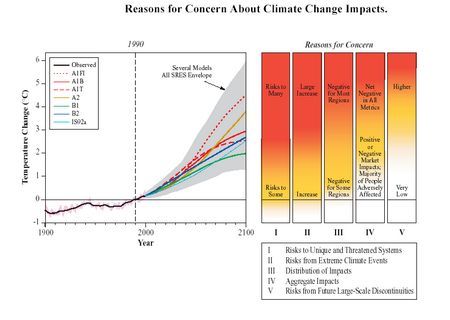
The rise in global temperature is alarming. The IPCC has told us what will happen if temperatures climb 5 C.
The COP-21 agreement aims to keep it to 1.5 C (already baked into the cake), but 2 C at the high end. The effects of that will be bad enough, but don't expect that this limit will be maintained unless we do two things in the very near term: (1) stop expanding fossil fuel extraction (and put an immediate moratorium on fracking while the truth about methane leakage is investigated) , and (2) reforest, (especially in the tropics). A new study points out that we can sequester carbon much faster by regrowing forests in devastated tropical areas than by simply maintaining the remaining old growth forests.

Tropical rain forests are not the only ones at risk from climate change. The U.S. Forest Service just put out their futures projection of the northern forests, which extends all the way down here to Maryland. The outlook is grievous with myriad environmental insults being thrown at the forest ecosystems faster than they can respond. Our intervention is needed to preserve these forests and to restore their health. Perhaps the best way to do this is through improving soil health.

While mycorrhizal fungi is conducive to healthy trees, running saprophytic fungi is even more fundamental, as it builds healthy soil. At the same time, some strains can dominate fungal parasites that capitalize on the stresses imposed on forest ecosystems by climate change and population growth.

Some of the edible species +Paul Stamets recommends for this, I already grow (oyster mushroom, garden giant, and turkey tail). Other recommended species include clustered woodlover and psilocybes. Mycelium can be cultivated very rapidly and then moved into damaged or threatened woodlands. One indicator for the best places to run mycelium is the presence or absence of dominant saprophytic species. These mushrooms fit well in forest garden patches, since the gardener is more likely to be there when they are ready to pick. In either case, eating these mushrooms requires a more rigorous identity verification since they are growing among other, non-edible types.

Saturday, March 5, 2016

How to Make Forests Renewable

A number of Maryland counties give out awards to people and businesses for excellence in recycling. This year, Calvert County has followed suit. I am deeply involved in recycling for the purpose of building better soil and would like to apply for one of the awards in order to bring more publicity to the potential for recycling woody waste in the form of biochar.

My recycling bona fides could also include acceleration of carbon cycling, which is a major element of what +Paul Stamets describes as mycoforestry. When forests are logged unsustainably (as they have been repeatedly in the U.S. since the settlers arrived), then many of the extant fungi have nothing to feed on after a few years and they die away. This interrupts the carbon cycle, reducing the quality of soil with every new tree harvest. The remedy Stamets prescribes is to insure that logging residues are left in close contact with the forest floor. This gives saprophytic fungi the opportunity to thrive on the dead wood, enriching the soil, leading to more rapid regrowth, giving the endophytes and mycorrhizae an opportunity to bridge the gap.

As a forest gardener, I like to get wood chips dumped on my property to use for food forest patches. The chips could well end up as mulch elsewhere, but when my place is closer, the tree guys would just as soon leave them with me. Either way, it's recycling, but I get it down to the soil fungi right away by keeping the chips no more than 1 foot deep. After 6 months, I add horse manure and biochar to accelerate the composting process, engaging a host of other microbes to break down the dead wood into food for plants.

In addition to encouraging persistence of native mycelia subsequent to logging, Stamets suggests dusting new tree roots with edible mycorrhizal mushroom spores before planting. Some of the recommended species are chanterelles on oaks and sweet tooth on conifers. That means going back to harvest the mushrooms in subsequent years. If these edible mushroom spores are used, then it isn't a good idea to also include spores for other non-mushroom-producing mycorrhizae, because they tend to outcompete the edibles. Sweet tooth also can be found under other deciduous trees, so I might try out this suggestion when I begin planting my forest garden.


Friday, October 16, 2015

Mycoforestry

Today I found what appears to be a bunch of clustered wood lovers fruiting on dead roots near my "farm."  I'm assiduously verifying the identity because this little brown mushroom has some deadly near-look-a-likes.  If they are hypholoma capnoides (aka clustered wood lovers), I might try to cultivate some - on wood chips.
Mr. Hanners, our local mushroom mogul, gets his thousands of logs delivered by tree service companies for a fee.  One thing the innumerable tree service companies are happy to drop off at no charge are fresh wood chips.  We had a pile conveniently dumped in our driveway early this year and now I have decided that several more are needed.
A byproduct of portable, powered equipment, and thus destined for near-term decline, wood chips are usually made from ramial wood, i.e. less than 4" diameter branches, in order to save on hauling or to avoid creating brush piles.
I have a solution to both of these problems.  Not only is hauling of bulky branches unnecessary, but forests would also benefit if wood chips were left behind and used as mulch for saplings.  My second solution is that, once we reach the point where it is too expensive to chip wood, purposefully constructed slash piles make an instant low-emissions biochar-generating burn opportunity.  Again, the biochar could be used to amend the soil for young plants in the vicinity.  Since biochar needs an initial charge of microbes and nutrients, the rich soil under the previously laid mulch beds would be good places for spreading biochar.
Along with these two measures, the forests subsequently benefit from the proliferation of various saprophytic fungi that break down the wood chips and leave a profusion of exudates, chitin, and complex carbohydrates that nourish trees and their soil buddies.   Mycorrhizae also flourish in biochar-rich soil.  The resulting humus is a living, networked organism that emerges much more quickly than over the natural cycle time.
The most well-known wood chip gardener example is Paul Gautschi in Washington.  Maybe I can help bring some of that attention to Southern Maryland.  I have a plan to combine wood chips, biochar, and gourmet mushrooms in commercial quantities.  Don't hold your breath though, when you are dealing with wood chips, it takes a year or so to get an end product.

Featured Post

Git 'er Done

By Mark Rain T o get them all done in time to avert ecological armageddon, the thirteen prescriptions for healing the planet offered by...