 Earthworks like swales are ways to direct and slow the flow of surface water, but the low hanging fruit for livestock farmers to reduce nutrient flows into the Bay is installation of riparian buffers. That is, they should build fences to exclude grazing livestock from access to streams. If they want to save on a big fence bill and have an even more helpful result, they should consider rotational grazing. In any case, simple fences that allow wildlife to get through are an important feature.
The Best Management Practice (BMP) with the next highest potential to achieve TMDLs is conservation tillage, which includes no till and minimum till. When you include biochar as a soil amendment (not yet recognized as a BMP, but deserves that distinction), humus formation is accelerated by perhaps a factor of 10. Conservation tillage relies on humus and plants to make up for the absence of artificial soil aeration. As the years go by, such soil-building measures make it possible to reduce fertilizer additions to zero.
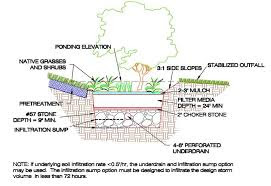 Biochar would also be useful just for its filtering ability in such devices as micro bioretention ponds and ditches. Specifications for these includes 2 feet of sandy soil, but a smaller amount of biochar could provide the same drainage and many times the nutrient filtering of the current designs. It would also yield better plant root growth than just sandy soil.
+Paul Stamets used buried burlap sacks loaded with mycelium to filter runoff from his property. It worked so well, it amazed the government inspectors who came to see the results.
These are all examples of how more effective measures are possible, but not promoted by the bureaucracy, since such official prescriptions such as the Maryland Environmental Site Design Manual don't recognize them. As the 2025 deadline for Chesapeake Bay TMDLs approaches too soon for the counties and states to clean up their watersheds, they are going to want to be able to claim the improvements that mycelium and biochar offer over existing practices.

